
“Why do volcanoes erupt?”
ScienceGrade 4
Rocks, minerals and erosion
 Coming soon · Mythlings Tutor
Mythlings Tutor turns the questions your child already asks into personalized lessons, stories and practice, and checks each one off against what school expects. For Kindergarten to Grade 6, in English or French.
Mythlings TutorMaya · Grade 4Why do volcanoes erupt?
Great question! Deep underground, rock gets so hot it melts into magma. When pressure builds up, it pushes the magma up and out. Let's fly to the top with Ember the griffin and see!
Quick check: what do we call melted rock that's still underground?
Lava✓ MagmaGranite
Grade 4 Science · Rocks, minerals and erosion
5 questions in a row
Most learning apps start with a lesson plan and hope your child cares. Mythlings Tutor starts with what your child already wants to know and builds the path from there, so what school expects them to learn arrives as the answer to their own questions.
“How do windmills make electricity?” Typed, tapped or said out loud.
A short illustrated story starring their creature, an idea to try away from the screen, and a few questions at just the right level.
Each step is matched to the expectations for their grade, so curiosity adds up to progress you can see.
Kids' questions, and the part of the curriculum each one opens up. Every path is different, because every child is.
ScienceGrade 4
Rocks, minerals and erosion

MathGrade 3
Multiplication and division

ScienceGrade 1
Daily and seasonal changes

ScienceGrade 4
Habitats and communities
ScienceGrade 5
Conservation of energy and resources
LanguageGrade 2
Composition: writing stories
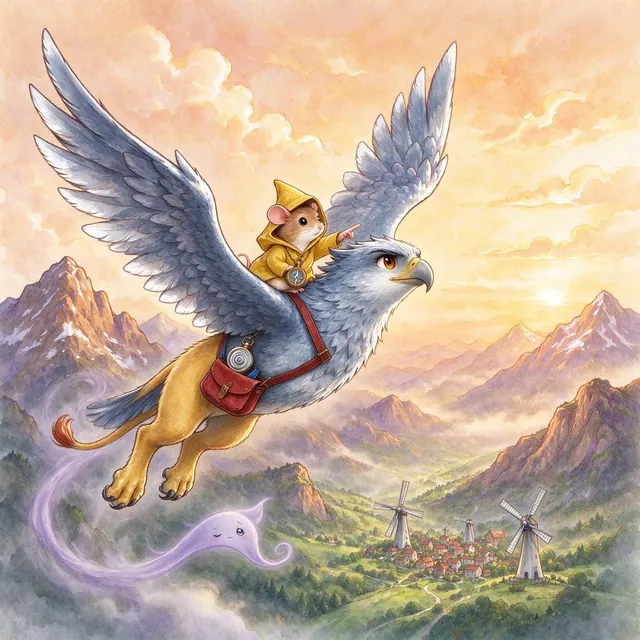
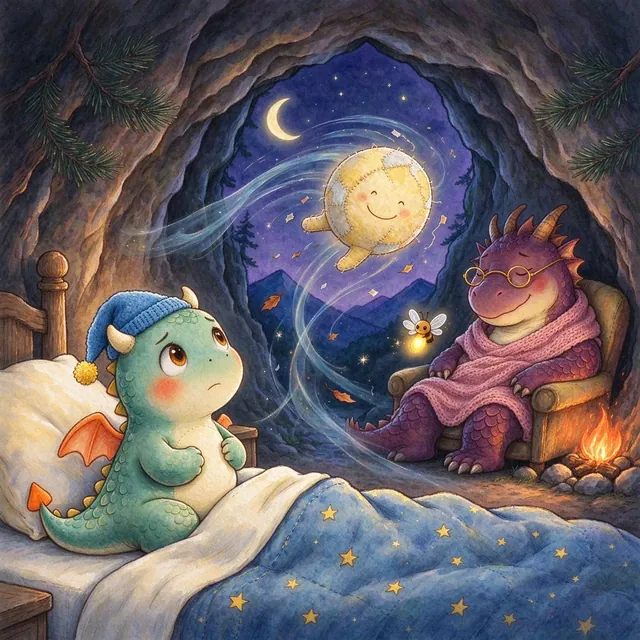
The curriculum links are examples: Mythlings Tutor matches each question to your own child's curriculum. The pictures are from real Mythlings stories.
1
Their grade, the curriculum their school follows, the language they learn in and what they love. A dragon fan gets dragons.
2
Your child asks anything. The tutor answers at their reading level, with pictures, a story and a question back that keeps them thinking.
3
Short, playful checks find what's understood and what needs another go, and adapt on the spot, like a good tutor sitting beside them.
4
A view for parents maps everything they explore to the curriculum: what's mastered, what's next and where a gap might be forming.
Following their curiosity doesn't mean anything goes. The parent view lays out the expectations for your child's grade and shows what they've explored, practised and mastered, so you know they're keeping pace with school, or racing ahead.
Maya's progress
Grade 4 · School curriculum
Language72%
Mathematics64%
Science and technology81%
Social studies45%
French38%
This week
Up next: fractions, through Maya's question about sharing a pizza with three dragons.
Lessons start from your child's own questions, the way inquiry-based classrooms work, so the motivation is built in.
Every lesson is tied to the grade-level expectations your child's school follows, whatever the province, state or country, so learning at home supports learning at school.
Mastery-based practice moves on once they've got it and slows down when they haven't. Nobody's bored, nobody's left behind.
Explanations are written for their age and reading level, read aloud when they like, with new words explained along the way.
Learn in either language, or both. Made for French immersion and bilingual families, with French written in French, not translated.
Ideas come wrapped in illustrated stories starring the creature your child already loves from Mythlings.
No ads, no chatting with strangers, no photos of your child, and their questions never train AI models. Grown-ups stay in charge.
Short sessions that end on purpose, with things to try away from the screen. No endless scrolling, no streak pressure.
Turn the after-school “why?” into real learning that lines up with what's taught in class.
A curiosity-led homeschool companion that keeps track of curriculum coverage for you.
Practice and explanations in French at home, even if you don't speak French yourself.
Meets each child where they are: more challenge for the keen, patient review to close learning gaps.
| Typical learning apps | Mythlings Tutor | |
|---|---|---|
| Starts from | A fixed list of lessons | Your child's own questions |
| Pace | The same for everyone | Adapts to what they've mastered |
| Curriculum | Generic grade levels | Adapts to your school's own curriculum |
| Motivation | Points, timers and streaks | Stories starring their own creature |
| For parents | A score | A map of what's covered and what's next |
| Ads and data | Often ads and tracking | No ads, no tracking, never trains AI on your child |
Personalized learning shapes what a child learns, how and how fast around that one child, instead of moving a whole class through the same lesson at the same pace. It usually brings together three things: starting from the learner's interests, adjusting the difficulty to what they've mastered, and giving frequent, gentle feedback.
Good teachers have always worked this way. The hard part is doing it for every child, every day. That's where an AI tutor can help.
An AI tutor uses a language model to explain ideas in words a child understands, ask questions back, and notice when something hasn't landed. Mythlings Tutor adds what a general chatbot lacks: a map of the school curriculum, a record of what your child has mastered, guardrails made for children, and stories and pictures made for young learners.
Instead of handing out answers, it guides: a hint, a picture, a question that helps your child reason it out. That's the difference between homework help and learning.
When children are curious, they pay closer attention and remember more, including things they pick up along the way to the answer they were after. Inquiry-based learning puts that to work: the child's question leads, and the teacher, or the tutor, makes sure the path passes through the important ideas.
One-to-one tutoring is among the most effective ways to learn: in Benjamin Bloom's well-known 1984 study, tutored students did far better than students taught in a regular class. Mythlings Tutor brings that patient, one-to-one attention to every curious kid.
Yes, that's the point, and it isn't one-size-fits-all. Mythlings Tutor adapts to the curriculum your child's school follows, wherever you live: a provincial curriculum in Canada, state standards or the Common Core in the United States, a national curriculum elsewhere. Each question your child explores is matched to the learning expectations for their grade, and the tutor gently steers toward the ones they haven't met yet, so following their curiosity still covers the curriculum.
Homeschooling families can follow their own plan and get the same coverage map, which makes it easy to show what's been learned.
It can be, when it's built for children from the start. Mythlings Tutor keeps grown-ups in charge of accounts, never shows ads, never asks for a photo of your child, keeps every answer suitable for their age and doesn't let children chat with other people. Your child's questions are never used to train AI models. Mythlings is made in Ontario, Canada.
We're building it now, and families on the waitlist get in first, a few at a time, so we can learn from them. Join the waitlist and we'll email you when there's a spot for your family.
We haven't set prices yet. Mythlings has no ads and is paid for by the families who use it, and the tutor will work the same way. Families on the waitlist hear about pricing first.
Kids from about 4 to 12, from Kindergarten to Grade 6. A grown-up sets it up, and younger children do best with someone nearby.
Your child's. Mythlings Tutor is built to adapt to whichever curriculum their school follows, from provincial and state standards to the Common Core or a national curriculum, and homeschooling families can follow their own plan. Write to [email protected] and tell us which one your family uses: it helps us decide what to prepare first.
No. It's a companion to school: it helps your child explore what they're curious about, practise what they're learning in class and catch gaps early. It works for homeschooling families too.
No. Like a good tutor, it guides with hints and questions so your child does the thinking. It explains, checks what they understood and moves on only once they've got it.
Yes. Children can learn in English, in French or in both, which makes it a good fit for French immersion at home.
Accounts belong to parents and guardians. We'll collect only what the tutor needs to work, never show ads or use tracking cookies, and never use your child's questions to train AI models. You'll be able to delete everything at any time.
It's made by the same team, with the same creatures and illustrated stories, but it's a learning experience of its own. Mythlings bedtime stories are ready to use today.
We keep your email and write to you when Mythlings Tutor is ready for early families. That's all: no newsletter, and you can ask us to take you off the list any time.
Join the waitlist and help shape a tutor that makes learning feel like an adventure.
In the meantime, bedtime stories starring your child's creature are ready tonight.
Make a bedtime storySample stories
Mythlings Tutor is in development, and what it does may change before it launches. The screens on this page are previews. Mythlings isn't affiliated with any ministry or department of education, or any school board.